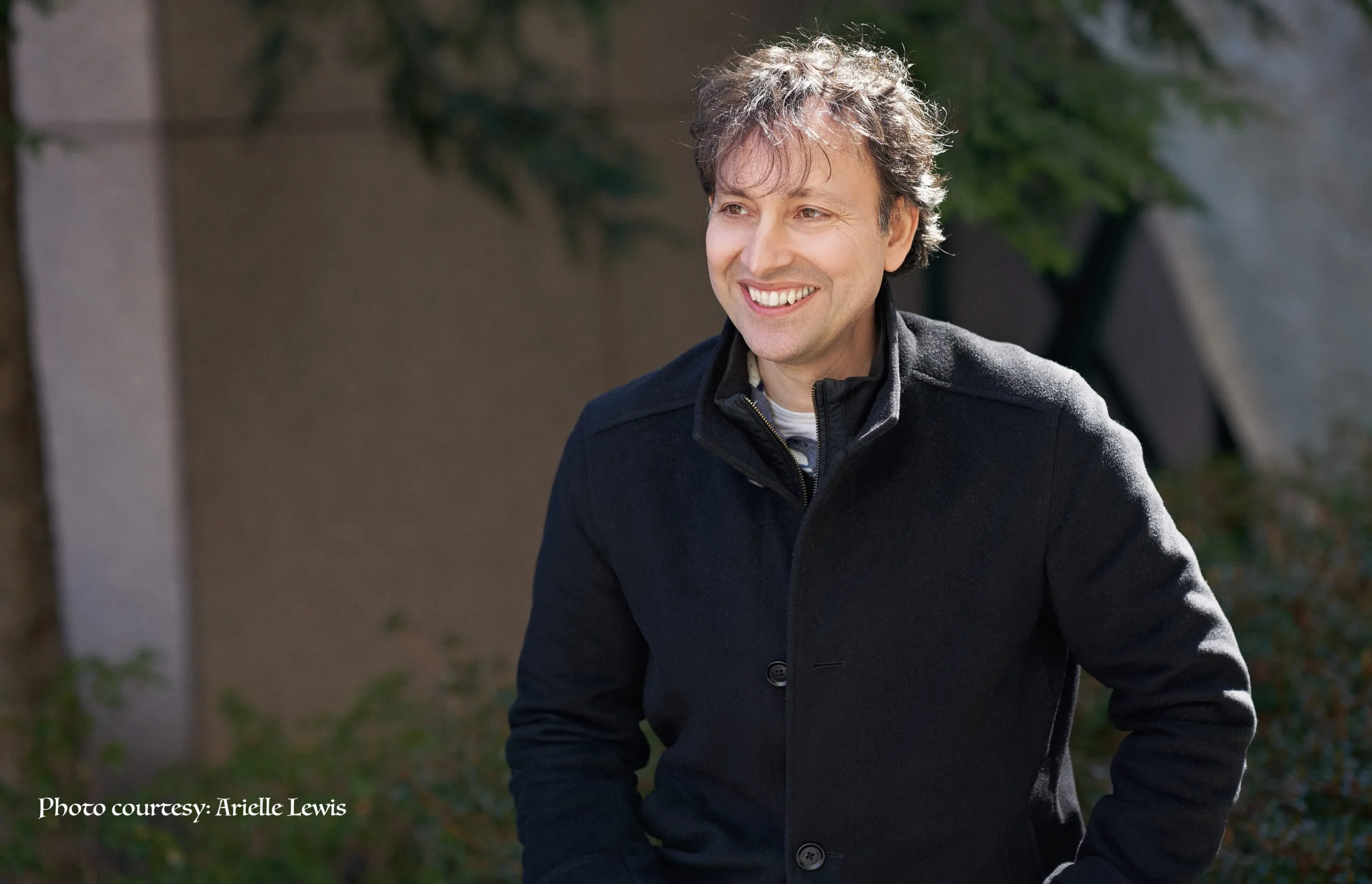
Bob, in some sense, had always been an outsider. Raised in a conservative background across Pakistan, England, and the United States, he never quite fit any one place, repeatedly surprised by how prejudice hides in unexpected places—or how carelessly someone’s story can be told on their behalf.
At first glance, the early days of Bob’s career were anything but on the fringe, having completed graduate studies in Development Studies and Economics from a world-class university in London. “I was doing very well, but inside, I was very empty,” Bob recalls. “I was the opposite of an artist at the time—everything was about checking off superficial boxes.” Then came a three-month course at the New York Film Academy, which he intended as a brief interlude before returning to his studies. That brief interlude turned into his new world.
“When I went to class, it was like someone had taken the curtains off of my eyes for the first time. I couldn’t believe it. People would ask questions directly, talk openly, and express themselves freely.” he recalls. “It felt like freedom. Every day in class, I experienced awe.” And from there, Bob committed himself to giving filmmaking a shot.
After Bob made his first film, he felt compelled to experience the other side of the camera for himself. He researched classes in DC and came upon a place with “amazing reviews”: The Theatre Lab. And between 2003 and 2004, Bob took many of our adult classes, many of which endure today as beloved Theatre Lab classes: Beginning Scene Study, Voice and Speech, Musical Theatre Workshop, and Drama Workshop, to name a few.
“Here’s what I’ll say: if the performances in my new film, Adam’s Fire, are good, then The Theatre Lab gets all the credit, okay?” Bob laughs. “It left a lasting impression that the performances are the key thing to focus on. There’s layers—comedy, drama—everything has its own layers.” To this day, Bob still abides by the principle that performances matter more than any other component in filmmaking, and that his job is to fit everything around the world the actors create.
The Theatre Lab, Bob recalls, also validated his emerging conviction that art wasn’t just art: that it has real-life benefits, that it can influence people and make a positive impact on society. “Places like The Theatre Lab made me feel 100% comfortable when I was an outsider,” he says. “Places where everyone can come together, where everyone feels comfortable, are very rare.”
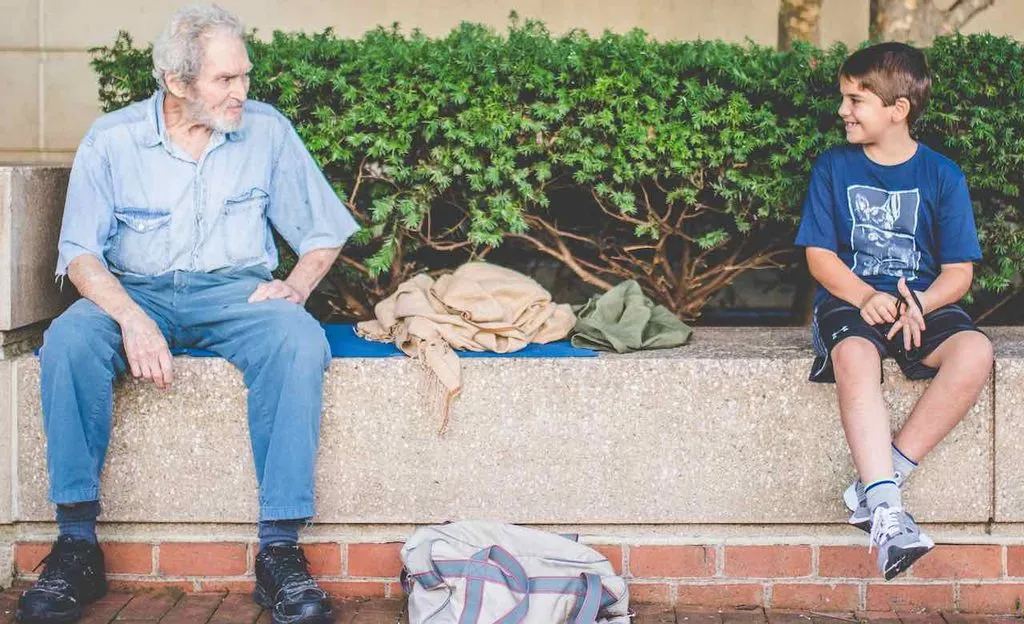
Alexander Barnett (left) and Alexander Fox (right) in Tikkun Olam (2021) / Photo via IMDb Title Page
Bob remains passionately committed to creating belonging for others, telling stories of the misunderstood, and challenging viewers to go beyond the barriers of their own prejudices. His first feature, Genius, explored learning disabilities in 2003, a time when such stories were rarely told with nuance (such stories are still few and far between today). His 2021 short film Tikkun Olam examined homelessness in DC—a subject that forced him to confront his own preconceived notions. “When I volunteered in a homeless shelter for the first time, I realized every person on Earth is a month away from being homeless,” he says. “But society makes it such that the homeless are them, and then there’s us, the normal people. But who are ‘them’? They’re doctors, lawyers, fathers, sisters, mothers. They’re us.”
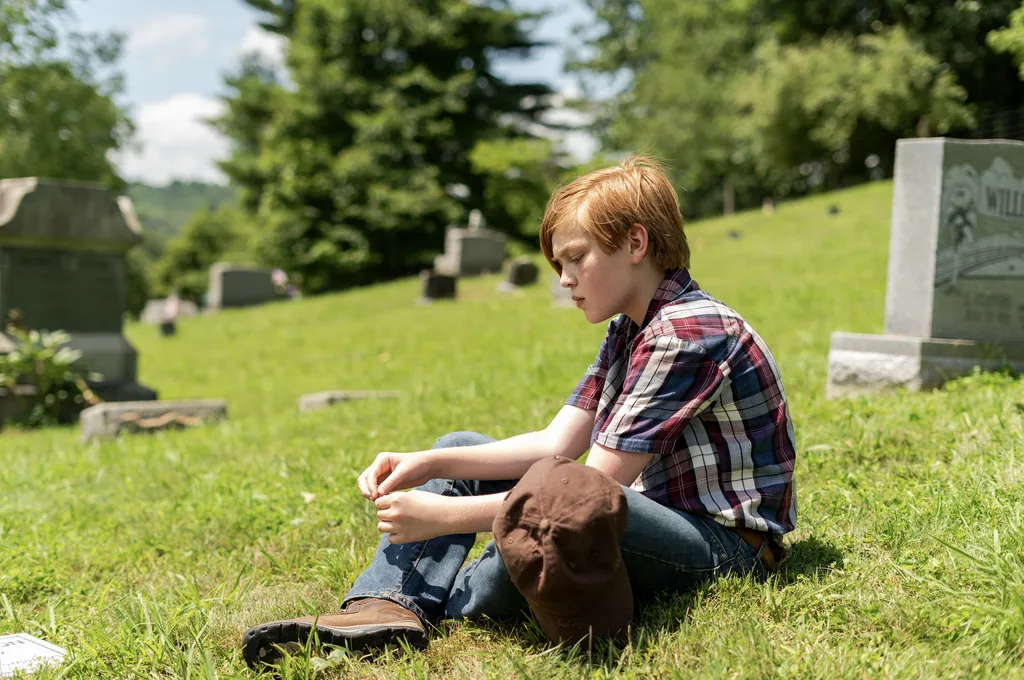
Hudson Barry as Adam in Adam’s Fire (2026) / Photo by Kaire Umoja
Bob’s newest film, Adam’s Fire, brings that same sensibility to a story about a grieving young boy in rural West Virginia who chooses between seeking vengeance for his mother and surrendering to a chance to heal. At the center is an unexpected friendship that puts Muslim and Western culture face-to-face with each other.
The movie was rooted in two unexpected sources of inspiration: first, a young taekwondo world champion he met in his mother’s hometown of Swat, Pakistan who defied every assumption about what women in her region could do. The other was a family of fifth-generation farmers in rural West Virginia who invited Bob, a Muslim filmmaker, and Muslim cast to film on their farm—with an openness that confounded everyone’s expectations.
“The people I was interacting with did not at all match what I was being told,” Bob remarks on the way this family went out of their way to make them feel comfortable. “The idea ended up coming through the film that when someone is going through something difficult, and there’s healing required, then every person in the community becomes important. Everyone has a different role.”
Adam’s Fire is, at its core, a film about healing. Bob is careful to say it is not a film where everyone simply loves each other. “There is friction, misunderstanding, and uncomfortable questions that we face head-on in the film,” Bob explains. But it is also, unmistakably, a film about what becomes possible when we heal through community and remain committed to our own authenticity.
For Theatre Lab students who might see themselves in Bob’s story, he has a few simple pieces of advice: “You need to convince yourself: I will do this. Until you convince yourself of that, no one else will be convinced.”
“This work is vulnerable because what we’re doing is, in a way, on the fringe of society. Even people within the arts community, they won’t necessarily understand you,” he continues. “It’s key to be in an environment, like the New York Film Academy, or The Theatre Lab, where a person can feel safe and be around other people trying new things.”
Adam’s Fire opens in a limited release from October 9-11 at AMC Theaters in Gaithersburg, MD, Alexandria, VA, and Morgantown, VW.